Getting around Cumbria without a car is easier than most people expect, and often more enjoyable than driving it. The trick is to stop treating buses and boats as a compromise and start treating them as the itinerary. A launch across Windermere, a bus grinding over Honister, a train along the coast at dusk — those are the bits people remember.
What follows is a working checklist. One warning before you start: Cumbria's services are seasonal. A route that runs six times a day in August can drop to two in November, so verify everything close to your travel date.
Start with tickets, not timetables
The ticket in your hand decides which buses you can board. Most of the Lake District network is Stagecoach, whose day and weekly tickets cover unlimited travel on their services across the county. The maths tips your way the moment you make more than two or three journeys in a day.
If your plans cross operators, look for a multi-operator day ticket instead. These exist in parts of the North West and cover several bus companies, which matters when you're linking a rural service to a main route. They aren't sold on every bus, so buy before you board where you can.
Rail works differently. Advance singles are cheapest but tie you to a specific train; off-peak returns cost more and let you drift. Railcards repay themselves quickly. On buses, English concessionary passes are free off-peak, typically from 9.30am on weekdays and all day at weekends and on bank holidays, though the exact rules are set locally.
Then look for combinations. Some cruise operators and bus companies sell joint boat-and-bus tickets, and the Windermere cruises connect neatly with the heritage railway at Lakeside. Ask at the pier or check the operator's own site before buying separately.
Buses: the details that catch people out
Cumbria's bus network has a spine and a set of seasonal ribs. The 555 runs Keswick to Lancaster via Ambleside, Windermere and Kendal, and it will get you most places on the central Lakes. The open-top 599 between Bowness and Grasmere is the famous one. But the routes that reach the best walking country — the Honister Rambler over the pass towards Buttermere, the summer services into Wasdale — often run only a few times a day and only between spring and autumn.
- Sunday and evening services are thin. Build your day around the last bus, not the first.
- Some rural stops are request stops. Put your hand out clearly; don't assume the driver will pull in.
- Have a fallback. Knowing there's a later bus — or a pub with rooms — removes most of the stress.
- A village stop can be a post outside a chapel. Ask someone if you're unsure where to wait.
Boats do more than pose for photographs
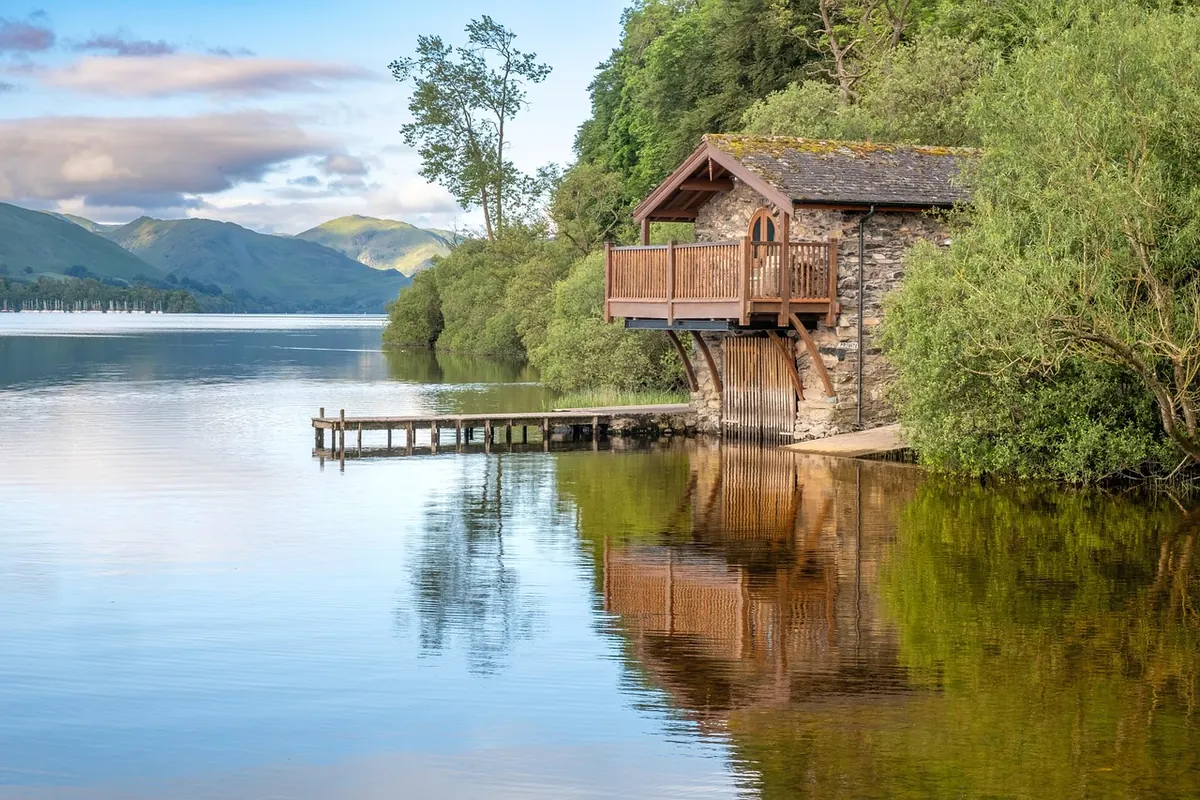
The lake cruises are transport as well as sightseeing. Windermere's services link Bowness, Ambleside, Brockhole and Lakeside. Ullswater's steamers run from Glenridding to Howtown and Pooley Bridge, which puts the classic Howtown-to-Glenridding lakeshore walk within reach of a car-free day. Keswick Launch connects the town with landing stages around Derwentwater, including the one below Catbells. On Coniston, the launches and the Steam Yacht Gondola open up the quieter western shore.
Two things to remember. Sailings thin out in the shoulder season and the last boat can leave mid-afternoon. Wind and weather occasionally stop services entirely, so don't build a chain of connections with no slack in it. Special sailings — dining cruises, themed evenings — usually need booking; ordinary hops rarely do.
The coast line is Cumbria's quiet secret
The Cumbrian Coast Line runs from Carlisle down through Workington, Whitehaven, St Bees, Ravenglass, Millom and Barrow-in-Furness, and it is genuinely beautiful: estuary light, sea on one side, fell on the other. Stations are mostly unstaffed, so buy before you travel or use a ticket app. Not every stop has a machine, and some are request stops where you signal the conductor.
It pairs with the narrow-gauge Ravenglass & Eskdale Railway, which climbs from the coast into the Eskdale fells. Coming from the south, the Furness line and the branch from Oxenholme up to Windermere do the practical work.
What to do with your bags
Luggage is the part of car-free travel nobody warns you about. Buses have a shelf or a buggy space, not a baggage car, and a hard-shell suitcase on a packed 599 is a bad time for everybody.
- Travel with one soft bag each, no bigger than a large rucksack.
- Line it with a dry bag or rucksack cover. Lakeland rain is not genteel about this.
- Tag every bag with a name and mobile number.
- Ask your accommodation to hold bags before check-in and after checkout. Most B&Bs and hotels will, and it buys you an extra day.
- Don't count on station left luggage. Facilities are limited and hours can be short, so check first.
- Book rural taxis ahead. There are few, and they are busy in summer.