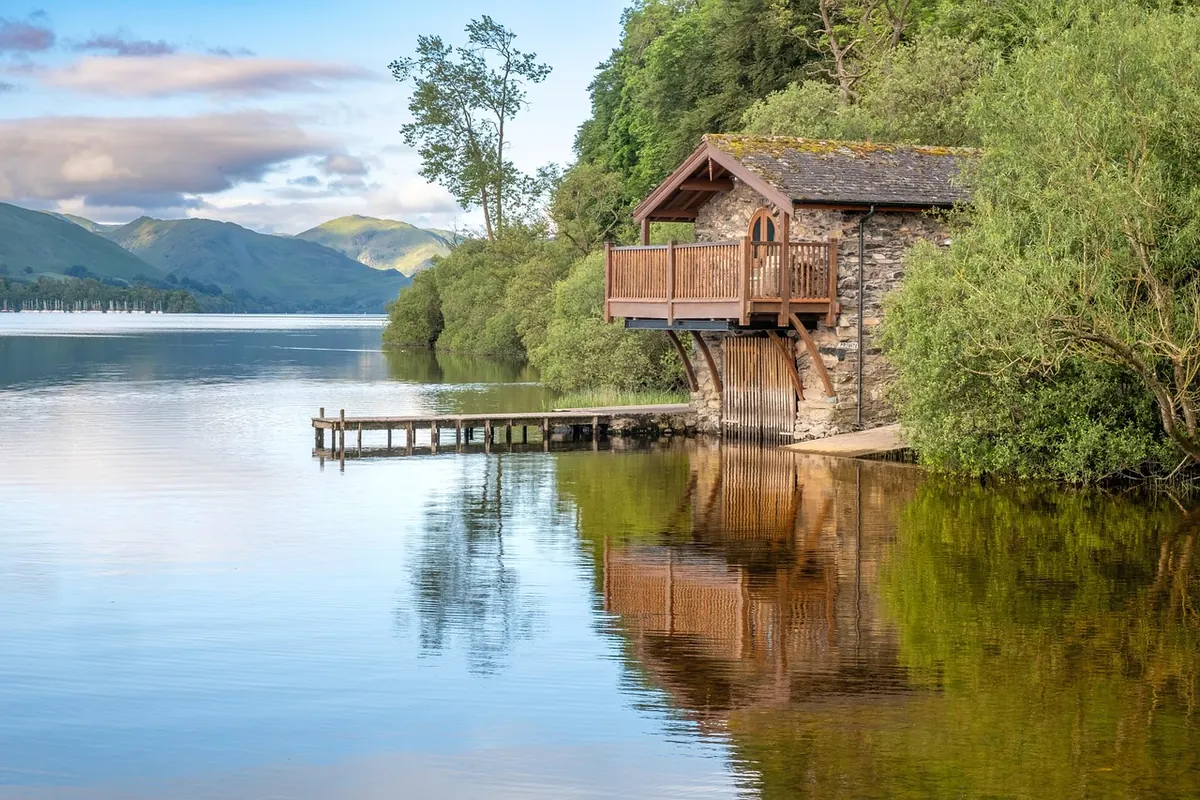
There is a moment, somewhere between thigh-deep and waist-deep, when a Cumbrian tarn stops being scenery and becomes an event. Your breathing changes. The urge to turn back is strong and brief. Then you are in, and the whole valley looks different from water level.
Swimming outdoors in Cumbria is not complicated, but it is not a heated pool either. Most of what keeps people safe is unglamorous and practical: knowing how cold the water really is, getting in slowly, being visible, and knowing where you are welcome. The rest is acclimatisation and a decent flask.
Start with the temperature, not the view
On a hot July afternoon, a shallow bay on Derwentwater or Windermere might reach the high teens. Two metres down it will be noticeably colder. High tarns such as Easedale or Stickle can stay in the low teens all summer, and in winter the big lakes sit around four to six degrees, with tarns colder still.
That matters because the first minute in cold water is the riskiest. Cold water shock triggers a gasp reflex, a spike in heart rate and rapid breathing. It passes, but not instantly, and it is why leaping in from a jetty is a bad idea no matter how warm the air feels.
Swim for minutes, not miles, to begin with. Ten minutes in twelve-degree water is a proper swim for a newcomer. If you cannot control your breathing, you are not ready to put your face in.
How to get in without panicking
- Wade to knee depth and stop. Splash water on your wrists, neck and face.
- Breathe out slowly through pursed lips rather than gulping air.
- Walk in to your waist and wait until your breathing settles.
- Push off and swim a short loop parallel to the shore, not out into the middle.
- Get out while you still feel fine. Shivering is a late warning sign, not an early one.
Your body keeps cooling after you leave the water, so the shivers can arrive ten minutes later in the car park. Plan for that with dry layers waiting and somewhere sheltered to change.
If in doubt, get out, get dry and get warm. No swim is worth a fight with your own body temperature.
Kit that earns its place in your bag
- A tow float. Bright, inflatable, and usually with a dry compartment. It makes you visible to boats and gives you something to rest on.
- A bright swim hat. Cheap, warm, and far easier for a friend on shore to spot.
- Goggles that fit. Loose ones leak and ruin a short swim.
- Neoprene boots, gloves and socks. Cold feet and hands end more swims than cold torsos.
- A wetsuit, if you want one. Useful for beginners and longer swims, though it lets you stay in longer than your core temperature would like.
- Dry bag for phone and keys, plus a whistle on a cord.
- Warm layers for afterwards — fleece, woolly hat, thick socks, trainers you can pull on wet feet.
- A flask and a snack. Rewarming is slow work.
Where to begin in Cumbria
The easiest first swims are the popular ones with a gently shelving shore, somewhere to leave a bag and other people around. The shallows near Keswick on Derwentwater, the southern end of Buttermere, and the grassy shores around Fell Foot on Windermere all see regular swimmers in summer. Buttermere is especially good for a beginner: the water is clear, the shore is close, and the view gives you something to think about while you catch your breath.
Tarns are a step up. Blea Tarn near Langdale, Small Water above Haweswater and Easedale Tarn all involve a walk in, which means you arrive warm, tired and further from help. Take a friend, take layers, and treat the swim as the reward rather than the objective.
Check current access arrangements, parking and any notices before you travel. Shorelines change hands, paths close, and a spot that was fine last summer may not be this one.
Access, parking and permission
Much of the Cumbrian shoreline is farmland, private land or reservoir catchment. Reservoirs that supply drinking water are generally not open to swimming, so treat them as off limits unless signs say otherwise. On lakes with boat traffic and jetties, follow local byelaws and keep well clear of moorings, launch slips and anglers' lines.
Park considerately. Do not block gates, passing places or farm access, and pay for parking where it is offered. Arrive early in summer or walk in from a village. Take everything home, including hair ties, plasters and fruit peel. No soap, no shampoo, no fires, and no trampling of reeds and nesting banks — these small habits are what keep access open for everyone.
The hazards nobody puts on the poster
Blue-green algae can appear as a green, paint-like scum on the surface. It can produce toxins, so keep out of the water and keep dogs out if you see it or if notices are up. Weed and reeds are rarely dangerous, but they can alarm you. Roll onto your back, float, and untangle yourself slowly rather than thrashing.
Leptospirosis is a small but real risk in any open water. Cover cuts with waterproof plasters, avoid swallowing water, and if you develop flu-like symptoms in the weeks afterwards, tell a doctor you have been swimming outdoors. If you have a heart condition, take regular medication, are pregnant, or are unsure how cold water will affect you, speak to a medical professional before you start.
Also watch for sudden drop-offs where a shallow shelf ends, for thunderstorms building over the fells, and for the fact that steep rocky shores can be far harder to climb out of than they look from the water.
A sensible first swim
Pick a warm, still day at a well-used spot. Go with someone. Walk in slowly, swim for five minutes along the shore, and get out while you are still enjoying it. Change out of wet kit immediately, pull on a hat, and warm up gradually with layers and a hot drink rather than a scalding shower.
Then go back next week, when the entry is easier and you notice the heron on the far bank that you missed the first time.
Photo: pixifant / Pixabay